
Gardening ·
Booking hedge trimming for a boundary hedge
A boundary hedge needs more than a quick tidy. Agree the shape, access, timing, wildlife check and clippings before booking a gardener.
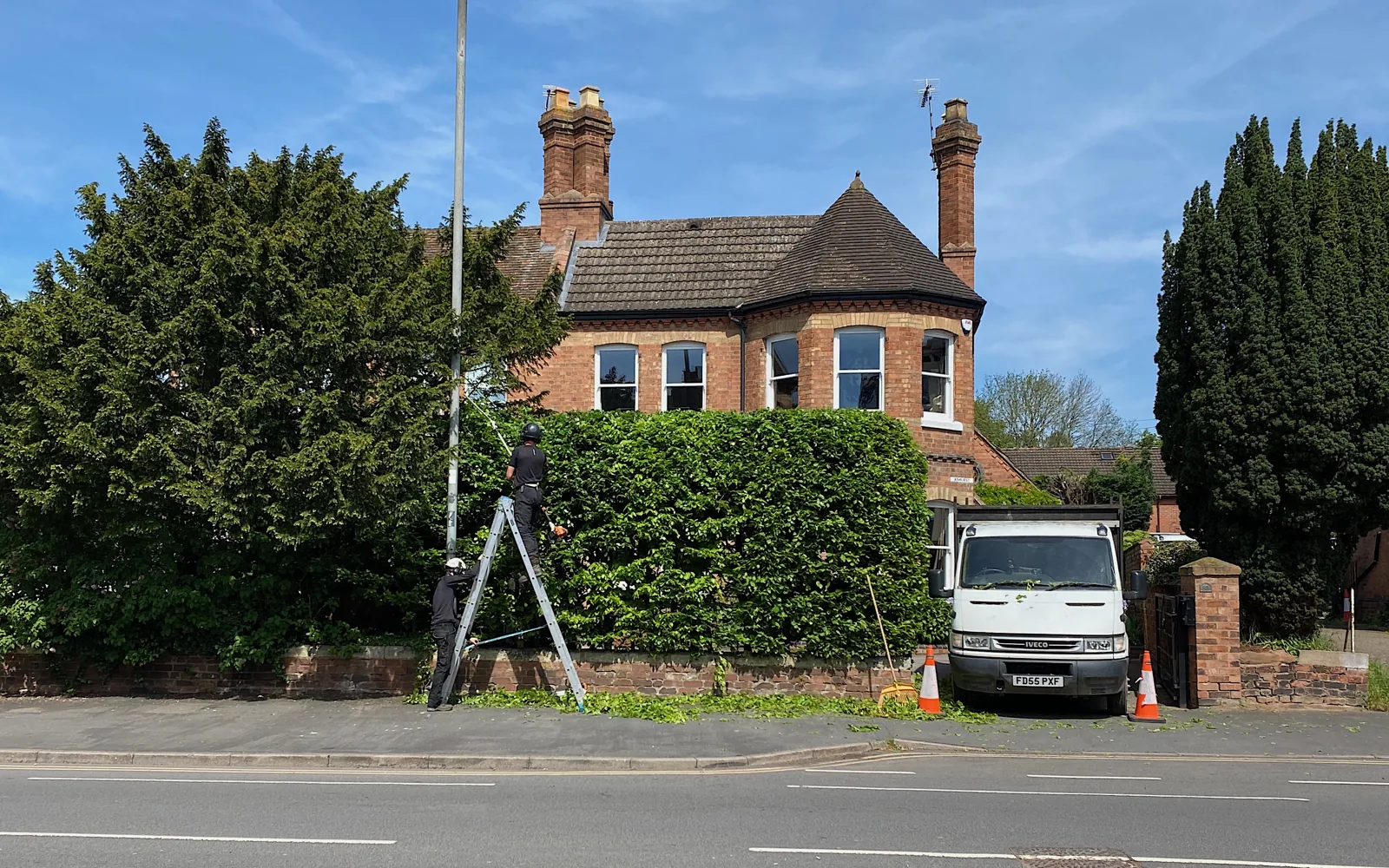

Look at the whole boundary before asking for a price
A hedge can look like a simple straight line from the kitchen window and a very different job from the pavement or next door. Walk its length and note the approximate height, length and depth. Photograph both ends and any awkward section, such as a slope, a gate, a wall, a greenhouse or overhead cables. If you cannot safely see the far side, say so. Do not assume the gardener can reach it from your land.
Describe the result you want, not just “cut the hedge”. Is this a light trim to keep its existing outline, a lower top, a narrower face, or a substantial reduction after several years of growth? The RHS distinguishes light trimming from renovating an overgrown hedge. Those are different amounts of work, and a large reduction can change how the hedge looks afterwards.
If the hedge borders a neighbour, discuss the intended height and access with them before the visit. A gardener should not have to discover at the gate that the other side is inaccessible or that a neighbour objects to the proposed shape. The government’s garden hedge guide recommends talking through the problem and proposed result. It is a useful way to avoid paying for a visit that cannot be completed as imagined.
Let the plant determine the cut
Ask what is growing in the hedge if you do not know. Privet, beech, hawthorn, laurel and conifers do not all respond in the same way or need cutting at the same time. The RHS pruning guidance lists different timings by species, so a date that suits one boundary may be poor for another. Send clear close up photos of leaves and stems, but let the gardener identify the plant and recommend the scope on site if the pictures are inconclusive.
Be especially clear if you want to take a conifer hedge back into brown, older wood. Most conifers do not regrow from old wood, with yew an exception, according to the RHS guide to trimming hedges. Ask what the finished face is likely to look like before agreeing a deep cut. A promise to make an old hedge much smaller without discussing the likely bare areas is not a useful quote.
The shape matters too. A tall formal hedge kept slightly narrower at the top allows light to reach the base. But a flowering or berrying mixed hedge may be better with a looser outline and less frequent cutting. The Woodland Trust explains how cutting every section every year can reduce flowers and berries. Tell the gardener whether neatness, screening or wildlife value is your main priority, because one severe, uniform trim may not deliver all three.
Book around nesting birds, not just the diary
Before anyone cuts, the hedge needs a check for active nests. The RSPB describes March to September as the main nesting period, but birds may nest earlier or later. It recommends watching for repeated trips into the foliage and checking thoroughly before work. If there is an active nest, postpone any cut that would damage or disturb it until the nest is no longer in use. A calendar date alone is not proof that the hedge is clear.
There is no single blanket ban that makes every private garden hedge impossible to trim throughout spring and summer. Nest protection still applies, and other rules can differ by place and hedge. Government guidance for garden hedges says to check for nests and favours winter trimming. If your hedge is part of farmland, in a protected area, or contains a protected tree, check the relevant local rules before agreeing work.
For a hedge valued for berries, “as soon as autumn starts” may not be the kindest choice either. The Woodland Trust suggests leaving fruit for birds through winter where possible. Ask whether part of the hedge can be left for another year while the side over a path is cut back. That may be a better answer than treating the entire boundary as one identical strip.
Make the quote describe the difficult parts
A useful quote identifies which sides and top will be cut, the agreed target height or outline, and whether thick stems, tree growth or a separate renovation are included. Ask whether the gardener needs to see the hedge before quoting. A photograph from one angle can hide a steep bank, a fragile surface or a narrow passage. If access involves a neighbour’s garden, settle their agreement and a suitable time before the booking is confirmed.
For a tall hedge, do not prescribe a ladder from the comfort of a text message. HSE guidance on working at height says to work from the ground where practicable and use suitable, stable equipment. Tell the gardener about the height, slope, pavement, road, cables and any place a vehicle or platform might need to stand. They can then judge whether the job is within their equipment and competence, or whether a specialist is needed.
Agree what happens to the clippings. A long boundary can produce far more material than the finished trim suggests. Ask whether gathering, sweeping, bagging, loading and removal are in the price, and where the cuttings will be left if removal is not. Check parking or access arrangements, the payment point and how a weather delay would be handled. Compare quotes against the same scope, not just the cheapest figure.
Give the gardener a workable start and check the finish
Before the visit, move pots, toys and parked items away from the hedge where you can do so safely. Keep pets and children out of the working area, and tell the gardener about any fragile edging or hidden irrigation. If the job faces a public pavement, do not promise that the area can be blocked or used for equipment without checking what is permitted. A clear route and an accurate description of the site help the professional choose a suitable method.
At arrival, point out the agreed line and any part to leave alone. If an active nest or an unexpected obstacle appears, stop and agree a revised plan before more work is done. It is better to leave a section untouched than to turn a tidy up into damage. Where a neighbour has agreed access, keep the agreed side and time visible to everyone involved.
When the work is complete, look from both sides if you have permission to do so. Check the top, the face near the base, the gate and path clearance, and the agreed clippings plan. A hedge is living growth, so the finish need not resemble a painted wall. What matters is whether the agreed shape, access and clearing up were delivered. If you are looking for a gardener on LocalPickr, send the hedge dimensions, photos and intended result in your enquiry, then confirm directly that the professional offers hedge work and can visit your address.