
Pet services ·
The first walk with a new dog walker: make the handover work
A first dog walking booking needs more than a collection time. Meet the walker, agree the route and group, plan home access and learn from the first outing.

Meet before anyone collects your dog
The first outing should not begin with a stranger opening your front door while you are at work. Arrange a meeting with the person who will actually walk your dog. Show them how your dog reacts to a visitor, how you put on their harness and which words you use for coming back or waiting. If a company may send a different walker, ask who will turn up and whether your dog can meet that person too. Battersea recommends meeting one to one first so the walker can learn how the dog usually behaves.
Use the meeting to decide whether the proposed service fits. A dog that needs company throughout the day may need something other than one walk; a dog unsettled by unfamiliar dogs may not enjoy a large group. Tell the walker about pulling, noise sensitivity, reactivity, age, fitness and any restrictions relevant to the outing. Do not present a brief meeting as a guarantee of compatibility. Ask whether a shorter introductory walk with you available afterwards is possible, then agree how you will judge whether the arrangement should continue.
Agree what the booked walk actually includes
A quoted hour can mean different things. Ask whether it is an hour outdoors or an appointment window that also includes collection, travel and returning dogs. Agree the likely pickup window, walk length, drop off window and whether your dog will travel in a vehicle. If a route or destination matters, discuss it before paying. Dogs Trust advises putting pickup, drop off, walk length and equipment in writing, along with the other arrangements both parties may need to revisit.
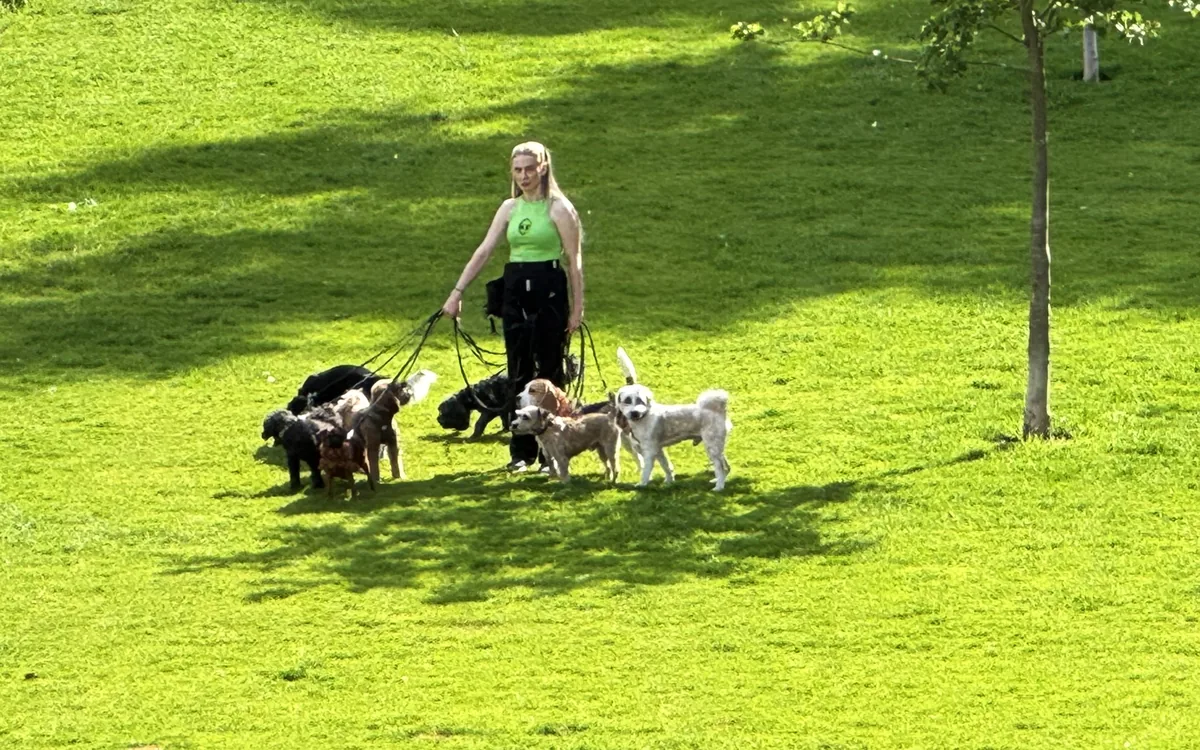
For a group walk, ask how many dogs will usually be together, how they are introduced and what happens if your dog is uncomfortable. A large group in a photograph tells you nothing about whether it suits your dog. Ask about lead use and do not leave permission to let your dog off the lead to guesswork: Dogs Trust specifically recommends agreeing it in writing. Tell the walker which lead or harness to use, whether a muzzle is required, which treats are permitted and the cues your dog knows. If training or behaviour work is proposed, ask about the person's competence and agree that separately.
Ask where the walk normally takes place. Rules can change between parks and councils. In England and Wales, public spaces protection orders can require leads, exclude dogs from certain places or limit the number handled by one person, including a professional walker. There is no sensible single number to assume for every route. Ask the walker to check the current local rules and any permit or landowner conditions for the places they intend to use.
Make home collection a separate, concrete plan
If the walker will enter while you are out, walk through the collection once while you are home. Show the correct door, how to find the dog, any inner gate and the sequence for leaving without another pet escaping. Agree which rooms the walker may enter, where the dog should be returned and how the property should be secured. Dogs Trust calls out securing the home after collection; Battersea recommends checking how keys and home security are safeguarded.
Make the key arrangement specific: who holds it, whether a substitute may use it, how a loss would be handled and when it will be returned. Share alarm codes and entry details privately, not in a public listing or request. If the walker sends a pickup or return message, agree what it will say and what they should do if they cannot get in. A neighbour, concierge, shared hallway or timed building entrance can change the plan, so mention those details before the first paid slot.
Decide what happens when the ordinary walk cannot happen
Give the walker an emergency contact and your vet's details, then agree what authority they have if your dog is ill or injured and you cannot be reached. Dogs Trust recommends deciding in advance about veterinary attention and costs. Explain any health issue or medicine that affects the walk directly to the walker. Do not ask them to diagnose a problem from a message; ask what they would do, whom they would contact and when they would stop the outing.
Weather needs a decision too. Ask whether the walker shortens, moves or cancels a walk in extreme conditions, how they will tell you and what happens to the fee. PDSA advises avoiding very hot or humid walks and, when conditions allow a walk, taking water, slowing down and allowing breaks. The dog's needs and the conditions on the day matter more than a fixed promise to complete a usual route. Battersea also suggests asking about cover if a walker is unavailable or the weather is adverse.
Settle ordinary changes at the same time: notice for cancellation, whether a replacement walker is allowed, the payment point and how you will be told if the planned time slips. Keep the agreed terms in one message or contract rather than relying on a chain of assumptions.
Use the first return to improve the next walk
Ask for a short account of where they went, how long your dog was out, who else was on the walk and how your dog settled afterwards. It need not be a report of every minute. You are looking for useful observations: did your dog take treats, hesitate at the van, pull towards another dog or seem relaxed at the handover? Compare those observations with what you told the walker, and give one specific correction if something did not work.
Check that your dog is home in the agreed place and the door is secured. If the group, route, equipment or timing needs changing, agree the new plan before the next booking. A first walk is a trial of a real working arrangement, not proof that every later walk will be identical. If you are browsing local services, check independently whether a person actually offers dog walking in your area; a directory or attractive photograph does not verify their availability, insurance or suitability for your dog.