
Gardening ·
Garden clearance or regular maintenance: what to book
An overgrown garden may need a one-off reset before routine visits will help. Here is how to describe the work, compare quotes and settle waste removal.

Choose the job by the garden's starting point
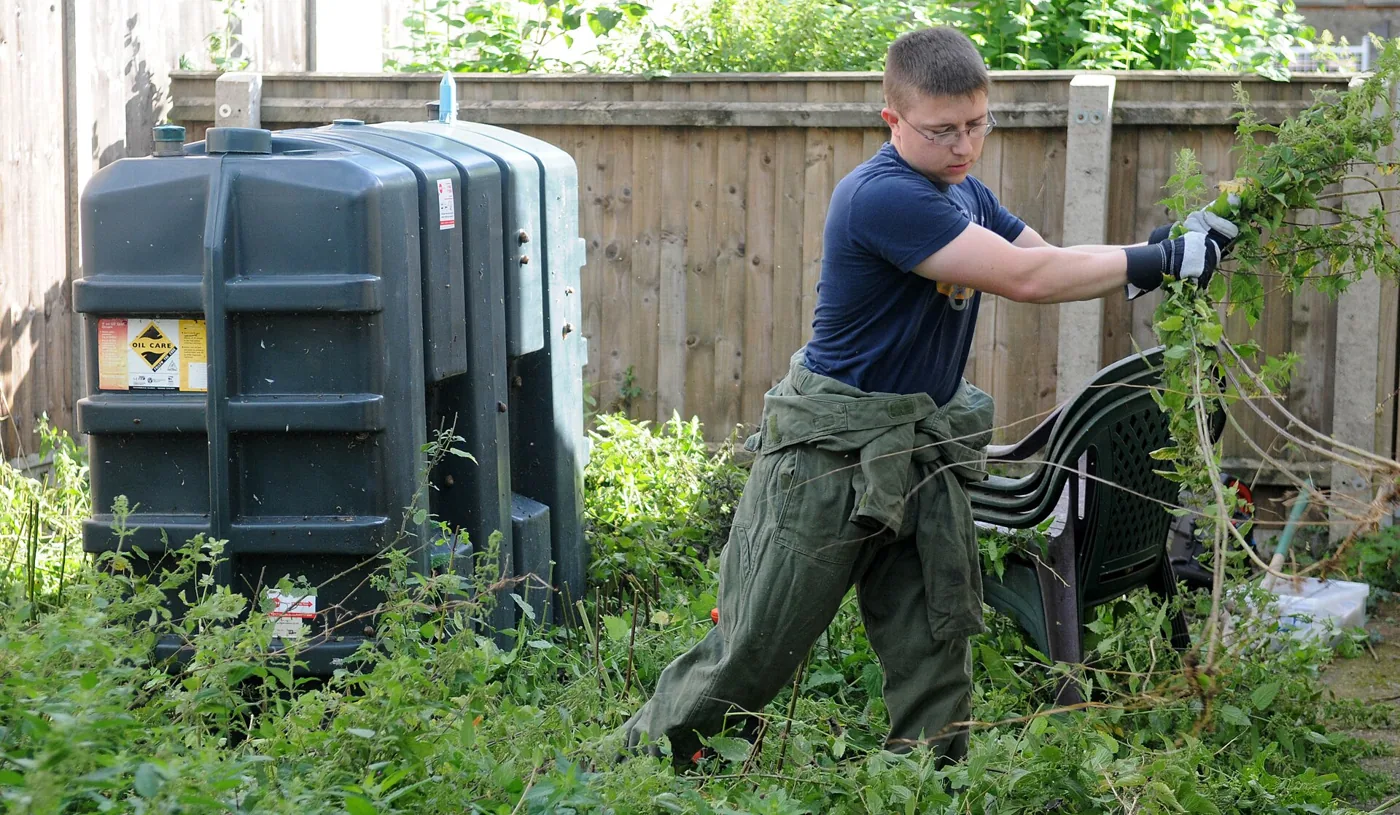
If you can still use the paths and see the beds, but the lawn needs mowing and weeds keep returning, ask about regular maintenance. If brambles have swallowed a corner, shrubs block access or the garden has accumulated cuttings and clutter, a one-off clearance or renovation visit may be the better first request. The labels are not fixed packages. The Gardeners Guild lists both routine tasks and complete clearance among work some gardeners can offer, while warning that individual services vary.
The useful question is not simply whether you need a gardener. It is what condition you want the garden in after the first visit. A clearance can make a space accessible and manageable without making it newly landscaped or permanently weed-free. Routine visits can then deal with regrowth, mowing and seasonal jobs. If you want a new patio, major tree work or a redesigned planting scheme, say so early: the person quoting for routine maintenance may not offer that work.
Describe a clearance as a result, not a vague tidy-up
Walk around the garden before asking for a price. Take a few clear photographs from different angles and name the areas that need attention. Point out what stays, especially a shrub you want to keep beside one you want removed. Mark any hidden steps, uneven ground, ponds, cables or structures that could affect access. If the only way through is a narrow side gate or the work must pass through the house, mention that too.
Ask whether the quote means cutting growth back, digging out roots, removing an established plant, or simply collecting loose material. These are different levels of work. One clearance service describes cutting back overgrown beds and removing garden waste as part of its offer, while another separates clearance from its bookable waste-removal service. Neither description defines what your own gardener will do. Get the particular tasks and the intended finish in writing.
If you are unsure what can be achieved in one visit, ask for a staged quote: first make paths and entrances usable, then tackle the heavier beds or hedges. This helps you decide what matters most without assuming a single afternoon will turn a neglected plot into a finished garden.
Settle the waste plan before accepting a price
A surprisingly large part of a clearance can be what happens after the cutting. Ask whether the gardener will leave trimmings in a heap, fill your green-waste bin, bag them for you, or take them away. Ask separately about old pots, broken fencing, rubble and other existing rubbish. A quote that includes green cuttings may not include those items. The contrasting provider policies above show why the word clearance alone is not enough.
If a private business will collect household garden waste you already have, GOV.UK says to check the relevant waste-carrier register; its page links to the registers for England, Wales, Scotland and Northern Ireland. It also points you to your council for local garden-waste collection and recycling options. Check the arrangements that apply where you live rather than assuming a gardener can use your council tip or bin for every load. Agree who pays any removal charge before work starts.
Compare the same work, not just the total
Send each gardener the same photos and short description. Ask whether they need to visit before quoting and whether that visit costs anything. The RHS advises clear scope and budget, more than one quote, and itemised estimates. It also recommends clarifying rubbish disposal and follow-up work, both common sources of misunderstanding. If two prices differ sharply, check whether they include the same people, time, equipment and waste plan before deciding one is cheaper.
Ask whether a figure is a fixed quote for named tasks or an estimate of time. If the work is hourly, find out whether the rate is per person, whether there is a minimum visit, and what happens if the overgrowth takes longer than expected. Citizens Advice explains the difference between a quote and an estimate, including why agreed extra work can change a bill. Rather than relying on an informal conversation, keep the scope, price basis and any agreed changes in a message you can both refer to.
It is reasonable to ask about relevant experience, references and insurance, especially for a large or awkward job. Do not assume membership of a professional body, a website photograph or a directory listing proves that a particular provider is insured or suitable for every task.
Allow for wildlife and the right time to cut
A garden can look ready for a hard cut while a hedge or climber is being used for nesting. The RSPB advises avoiding hedge cutting between March and September where possible, watching for birds moving in and out, and checking for active nests even outside the main season. It explains that active nests have legal protection. This is a reason to agree what can be done now and what may need to wait, not to assume every plant in the garden must be left untouched for months.
Tell the gardener if you have seen birds repeatedly entering a hedge or if you know a particular plant needs to stay. A careful quote may split the job into accessible areas now and sensitive areas later. If the visit is weather-dependent, agree how a postponement will be handled rather than building the whole plan around a single date.
Use the first visit to decide whether you need a routine
After a clearance, look at what will grow back and how quickly the useful parts of the garden could become difficult to use again. Ask what a repeat visit would actually cover: mowing, weeding particular beds, pruning at the right season or simply keeping paths open. The Gardeners Guild notes that maintenance involves planning as well as manual work. The right frequency depends on the garden, season and your own willingness to do small jobs between visits, so avoid buying a standing arrangement before you know the likely tasks.
When you request a gardener through LocalPickr, describe the starting condition and your desired first result. For example: “The back third is overgrown and the path is blocked. Please keep the fruit bush, clear the path and quote separately for taking away the cuttings. I may want regular mowing afterwards.” That gives a gardener a more useful basis for a conversation than “garden needs sorting”, while leaving room for them to explain what is realistic on site.